Global Safety Standards and Compliance Requirements for Steel Fire Emergency Exit Doors
Steel fire emergency exit doors cannot be produced or installed arbitrarily. They must comply with unified international and national fire safety standards to guarantee stable performance in real fire accidents. Understanding mainstream global industry standards is essential for building designers, manufacturers and property management teams.
In North America, all steel fire exit doors must pass UL 10C fire resistance tests and meet NFPA 80 code requirements. The standard strictly tests the door’s overall structure, sealing performance, hardware accessories including panic bars and automatic door closers. Doors are divided into three grades: 45-minute, 90-minute and 180-minute fire resistance levels. All emergency exit doors leading to stairwells in high-rise buildings must reach the 90-minute level or above. Besides, the standard clearly forbids locking fire exit doors during working hours to ensure unobstructed evacuation routes at any time.
European markets follow BS EN 1634 fire door testing standards, which put forward stricter requirements on smoke tightness. In European building codes, steel emergency exit doors must block both hot smoke and cold smoke. Many fire casualties are caused by toxic smoke inhalation rather than direct flame burns, so smoke insulation performance is highlighted in European standards. In addition, European codes require all panic push bars to be operated without any physical threshold, suitable for crowds wearing panic or escaping without vision in heavy smoke.
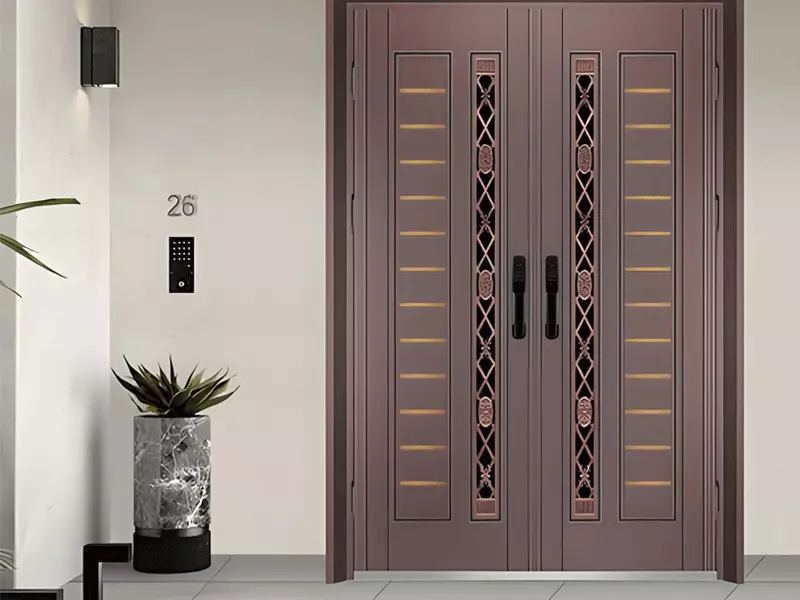
For commercial buildings across the globe, unified common compliance rules cover two core points. First, all matched hardware such as hinges, door closers and sealing strips must be fire-rated, because unqualified accessories will become the weakest point and fail the whole fire door. Second, secondary processing such as drilling holes or pasting advertisements on finished steel fire exit doors is prohibited, as such damages will destroy the integral fireproof structure.
In recent years, more fire accidents are caused by non-compliant fire doors rather than insufficient door performance. Standardized production, standardized installation and regular compliance inspection are equally important. Only when steel fire emergency exit doors fully meet official safety standards can they exert due fire-blocking and evacuation-guiding functions in real emergencies.
Previous: Why Steel Outperforms Other Materials for Fire Exit Doors
Next: No More
